05
Step 5
Code + charts - the real run
One sectioned script: the profiling head start, then a data-quality & integrity gate, then the business questions on the cleaned data. 19 visuals, every PNG rendered at 300 DPI from the actual run, every title a finding rather than a technique. Grab the real code below - one click, copy, run.
Get the code:
▶ Analysis script (v2)
◆ Data generator
◈ Profiling head start
◷ v1 (pre-review)
↗ All files
The 10-minute head start: one profiling call
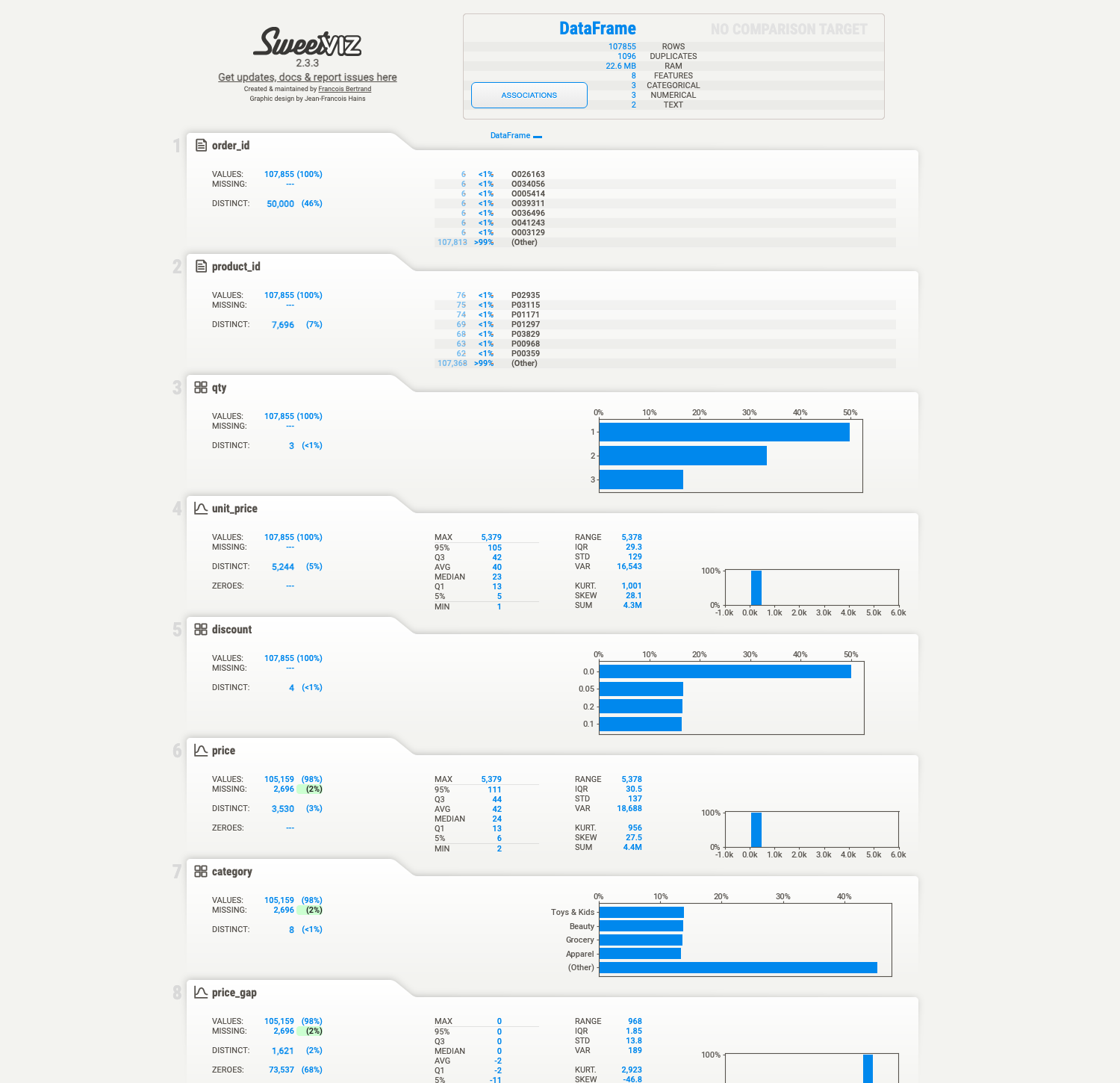
The sweetviz report on the enriched line-item table earns its keep before any custom code: price & category show 2% missing (that is the orphan-product join failing), price_gap has a median of 0 with a negative tail (the stale-price drift), and product_id shows 7,696 distinct values where only 5,000 products exist (the fake orphan ids). Three defects surfaced from a single call - then confirmed one by one below.
eda_codex_v2.py ↗ · the integrity gate (excerpt)
# Gate: referential integrity - do the foreign keys resolve?
prod_ids = set(products.product_id)
oi_orphan = ~order_items.product_id.isin(prod_ids)
orphan_value = order_items.loc[oi_orphan, "net"].sum()

# Normalize dirty category labels BEFORE any rollup.
mcat = merchants.assign(category_clean=lambda d: d.category.replace(CLEAN_CAT).str.strip())

# Timezone check: payment latency must never be negative.
pay["lat_h"] = (pay.paid_ts - pay.order_ts).dt.total_seconds() / 3600
neg = pay.lat_h < 0   # 100% of these are PH -> local-time logging
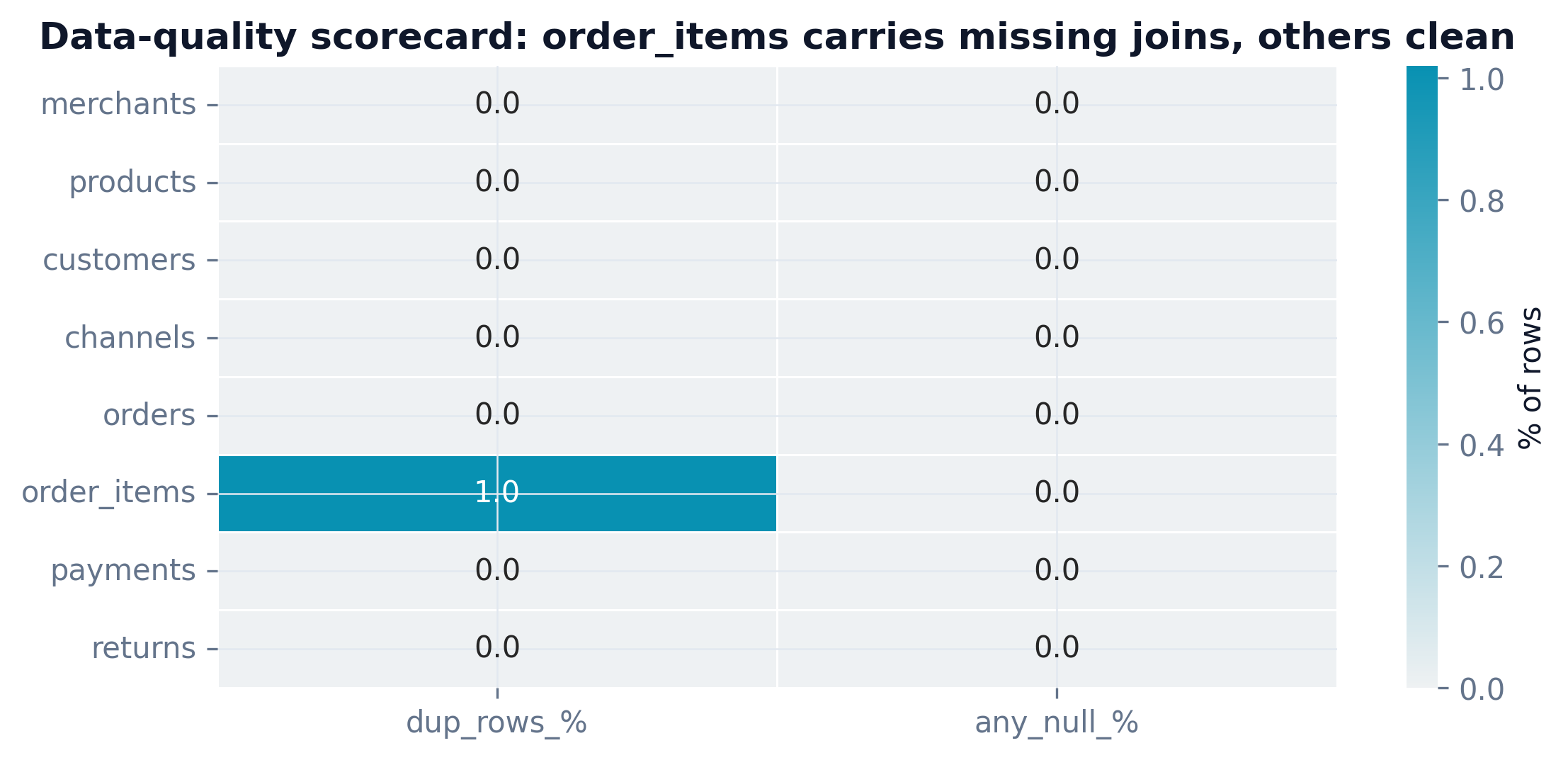
Within-table looks clean. Duplicate-row and null rates are near zero on every table - which is the trap. The real defects live across joins, not inside single columns.
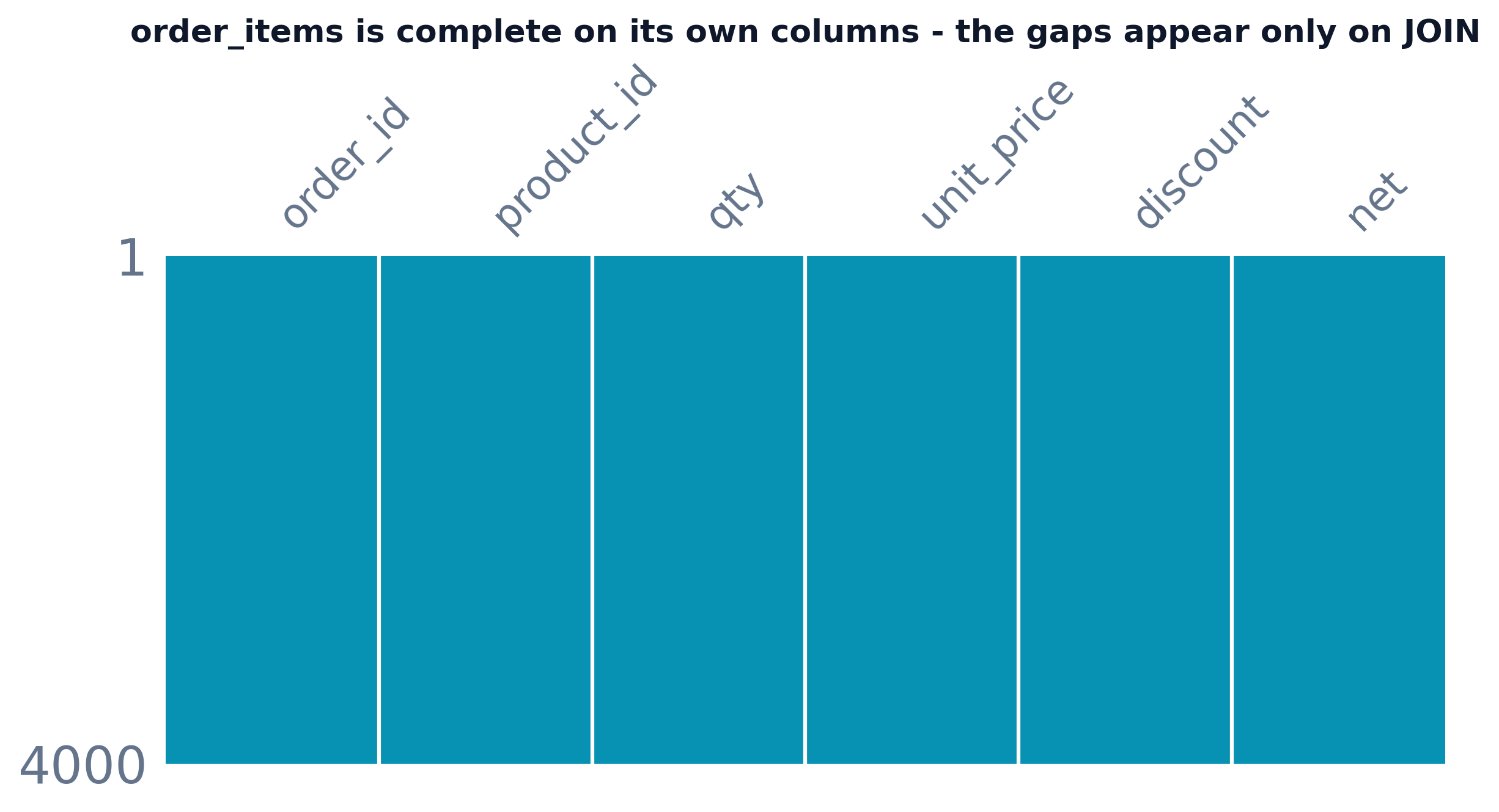
The gaps hide on JOIN. order_items is 100% complete on its own columns - so a single-table check passes while 2.5% of its product keys are quietly broken.
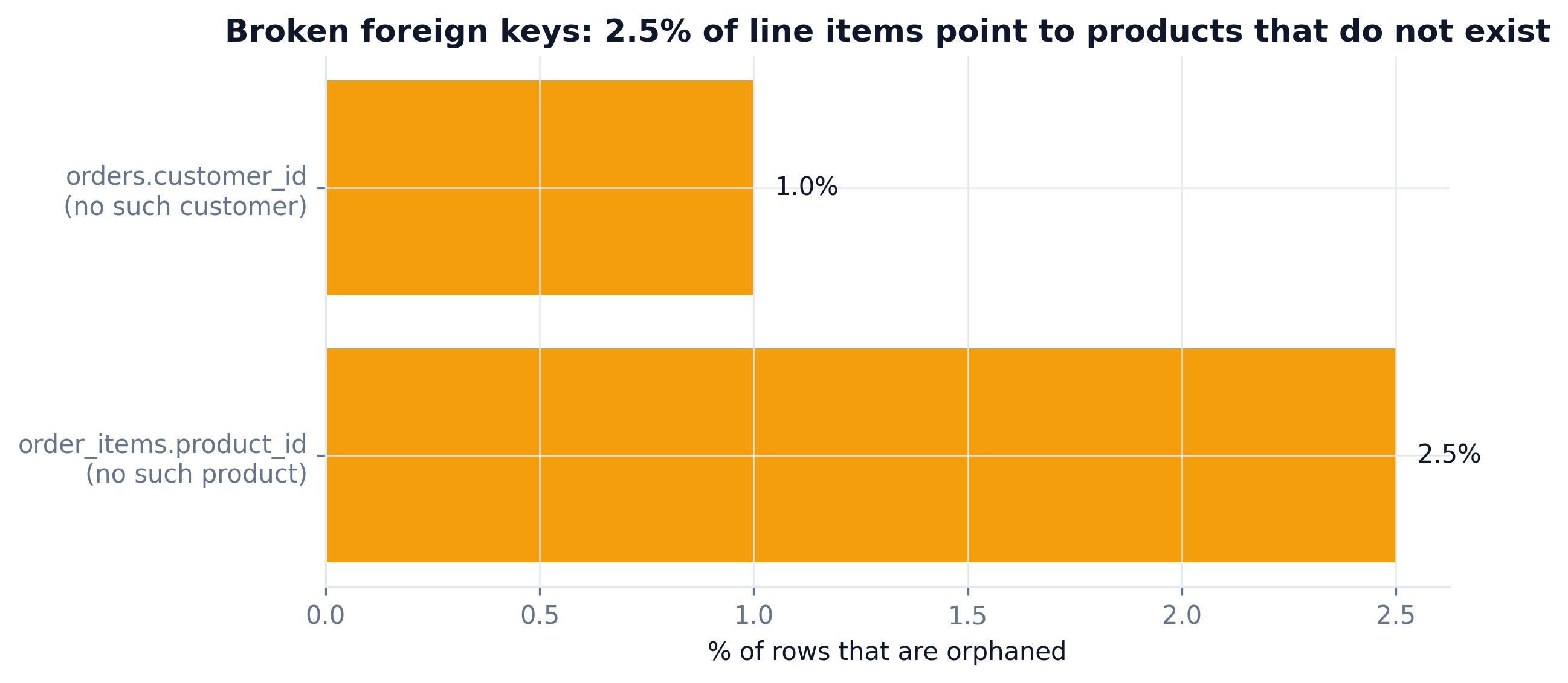
Broken keys. 2.5% of line items reference a non-existent product; 1% of orders a non-existent customer. $154k of line value cannot be attributed. Add a pandera gate.
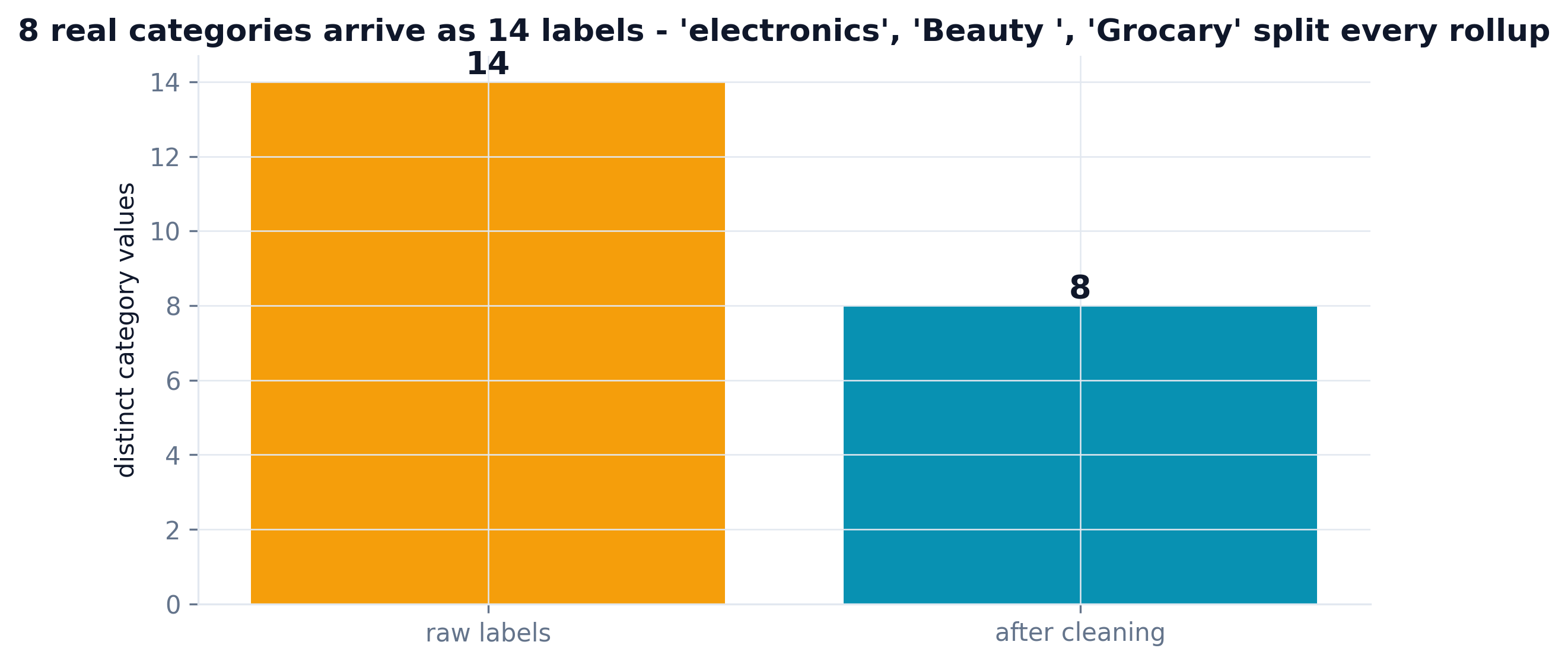
8 categories, 14 labels. 'electronics', 'Beauty ', 'Grocary' split every rollup. $557k of revenue sits under variant labels a naive GROUP BY would miss.
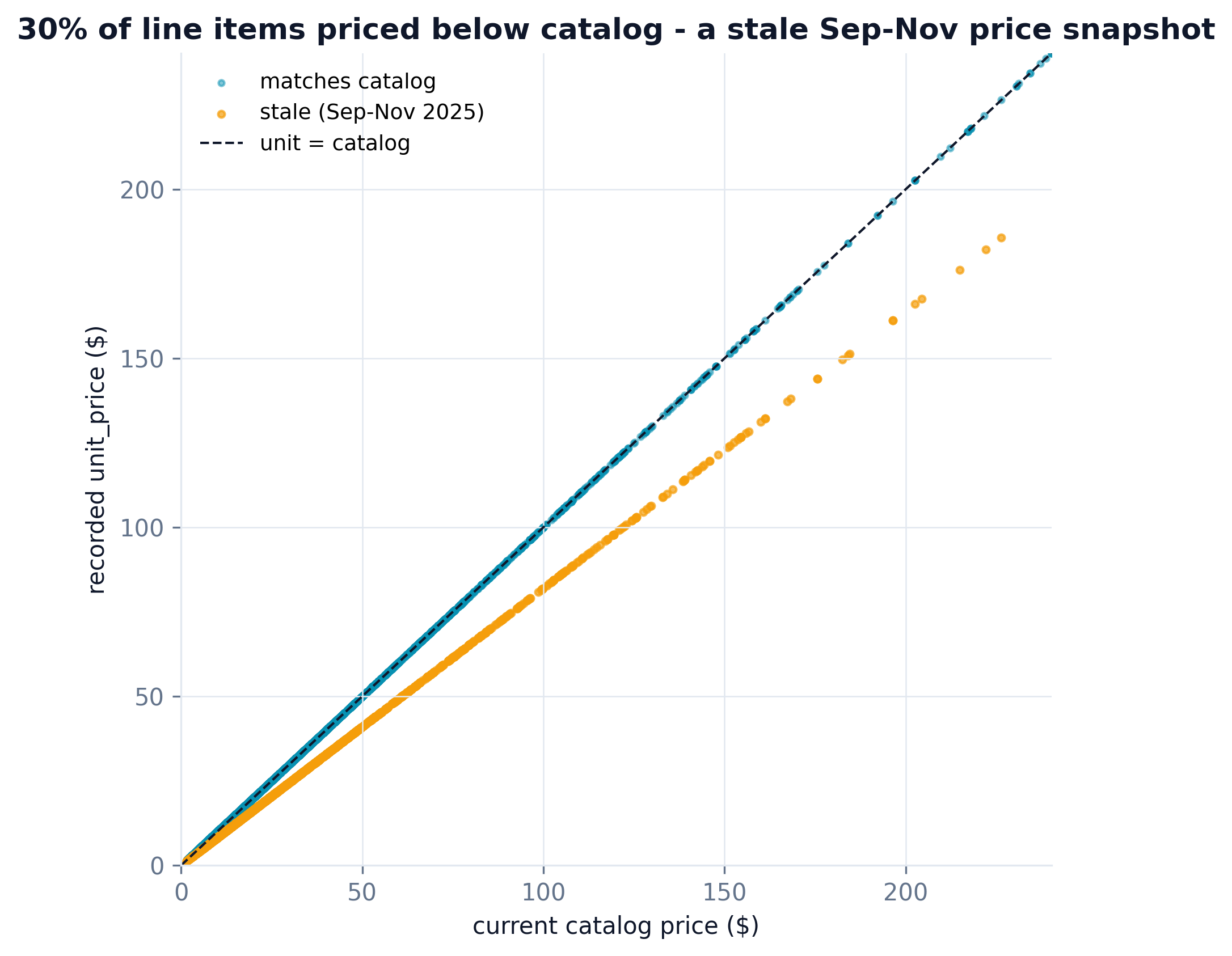
Stale prices. 30% of line items sit below the unit=catalog diagonal - a Sep-Nov snapshot frozen at 0.82x, understating $385k of revenue in that window.
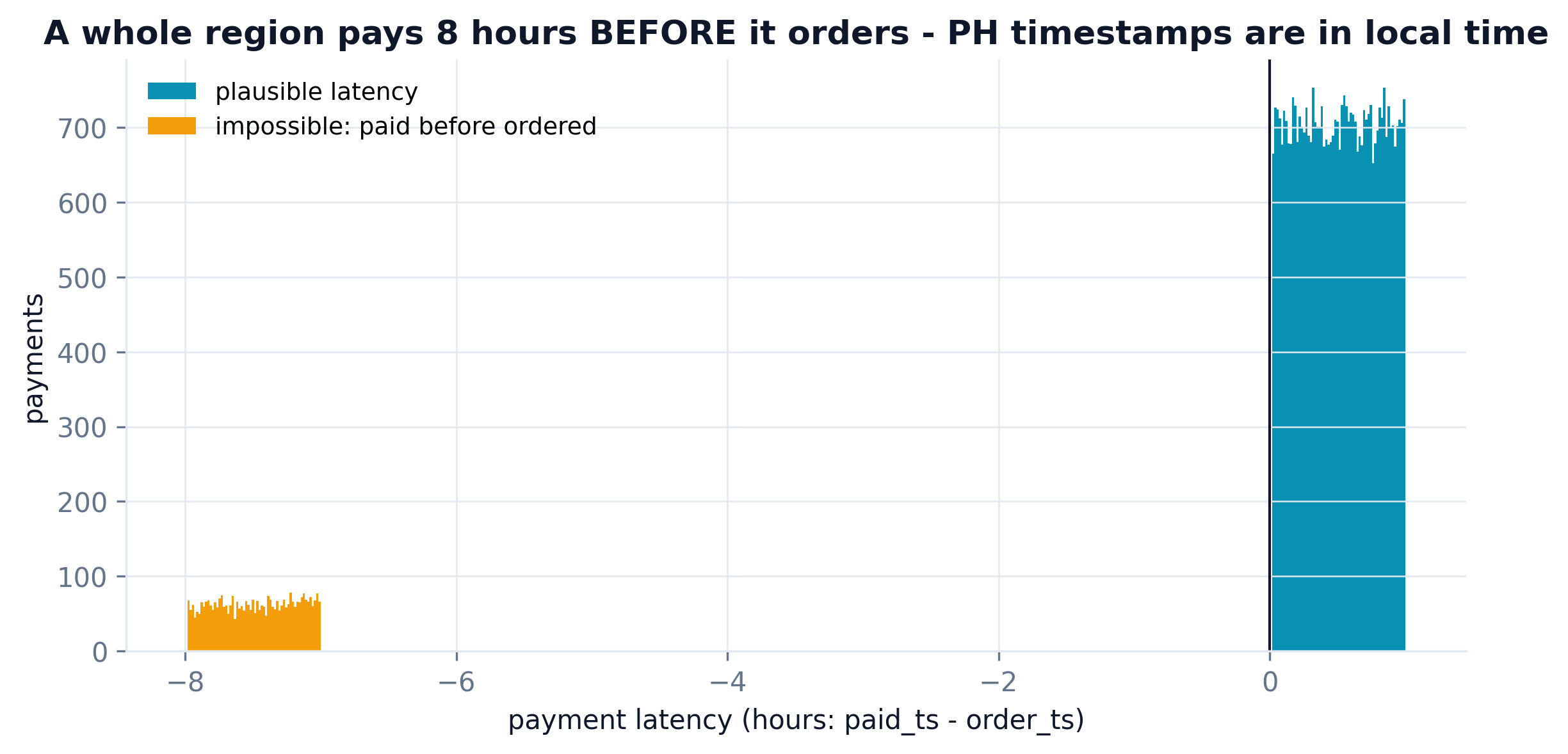
Paid before ordered. A whole region shows paid_ts ~8h before order_ts - every case is PH, logged in local time. $475k of GMV has untrustworthy timestamps.
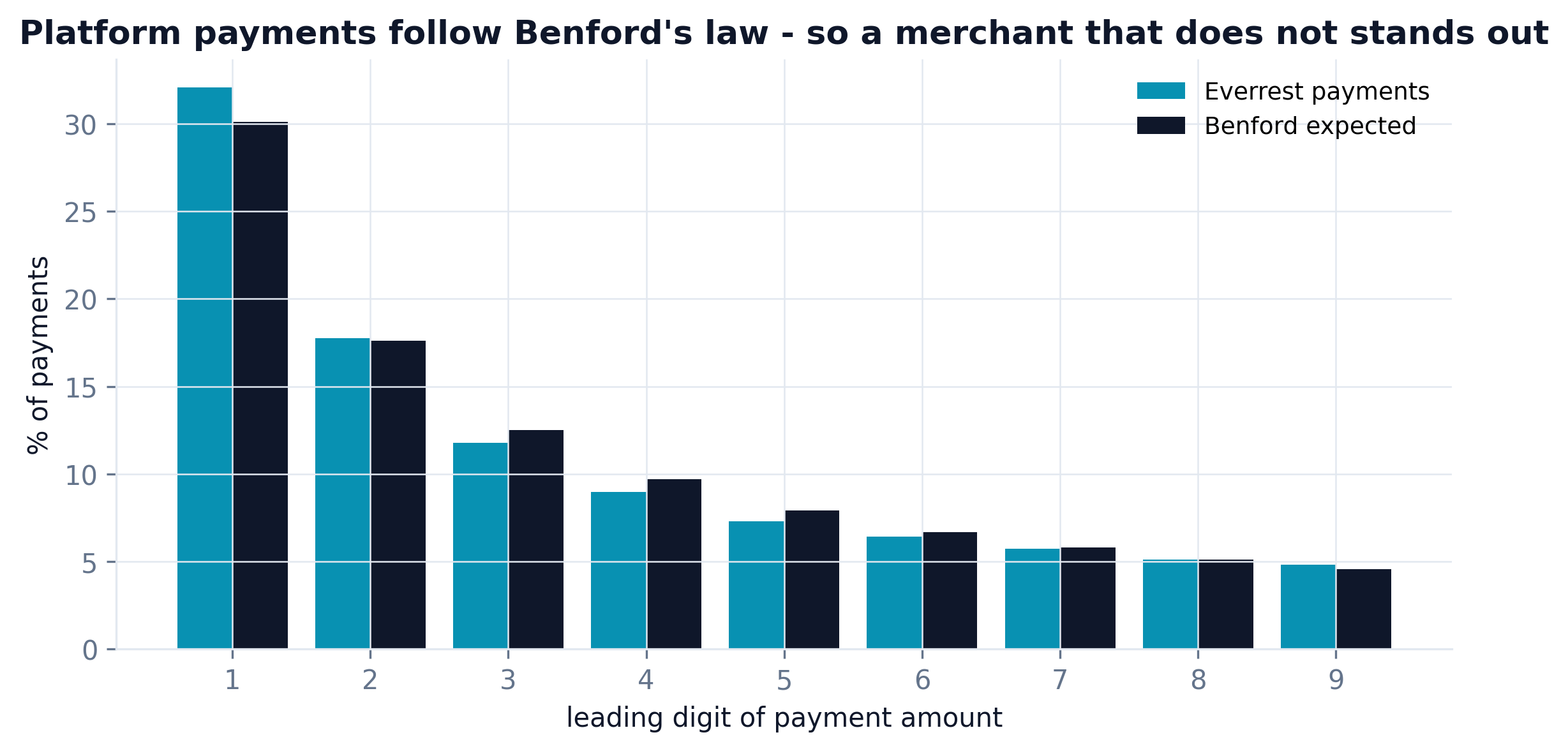
Benford holds - platform-wide. Real payment amounts follow the expected first-digit curve, which is exactly what makes a merchant that breaks it detectable.
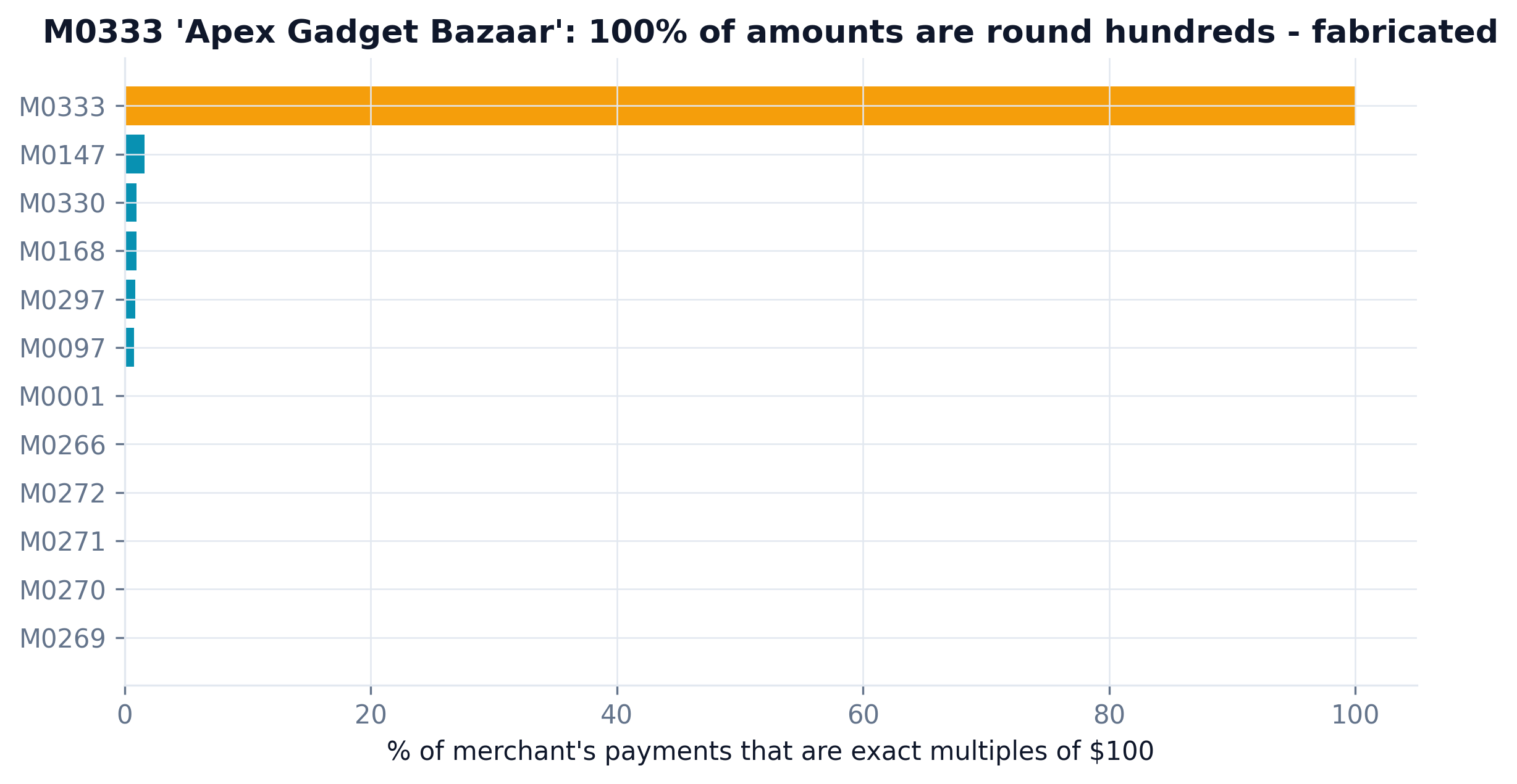
The fabricator. M0333 'Apex Gadget Bazaar' reports 100% round-hundred amounts vs near-zero elsewhere - reported payments differ from its line items by $45k. Fraud review.
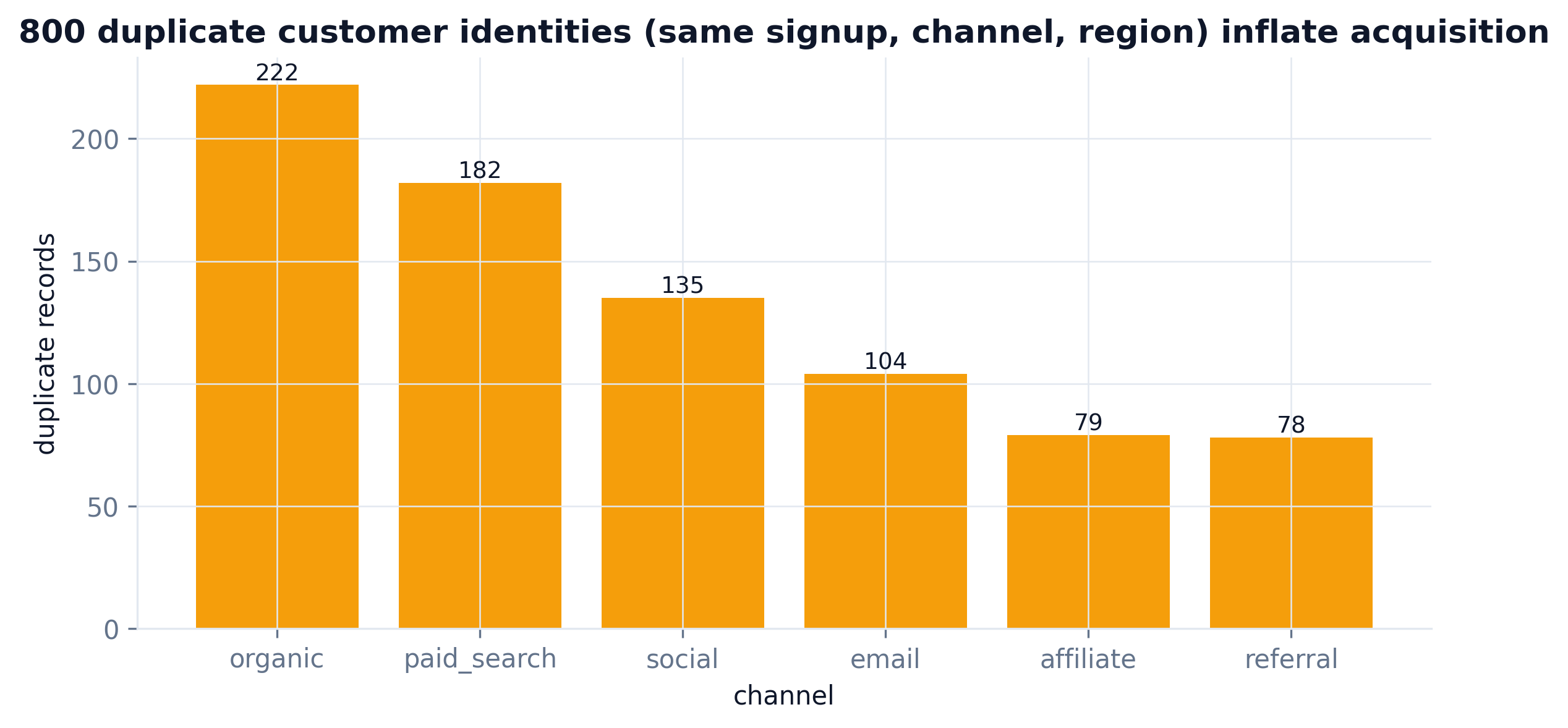
Double-counted people. 800 customers exist twice under different ids with identical signup, channel and region - 3.8% of the base. Every CAC number is overstated.
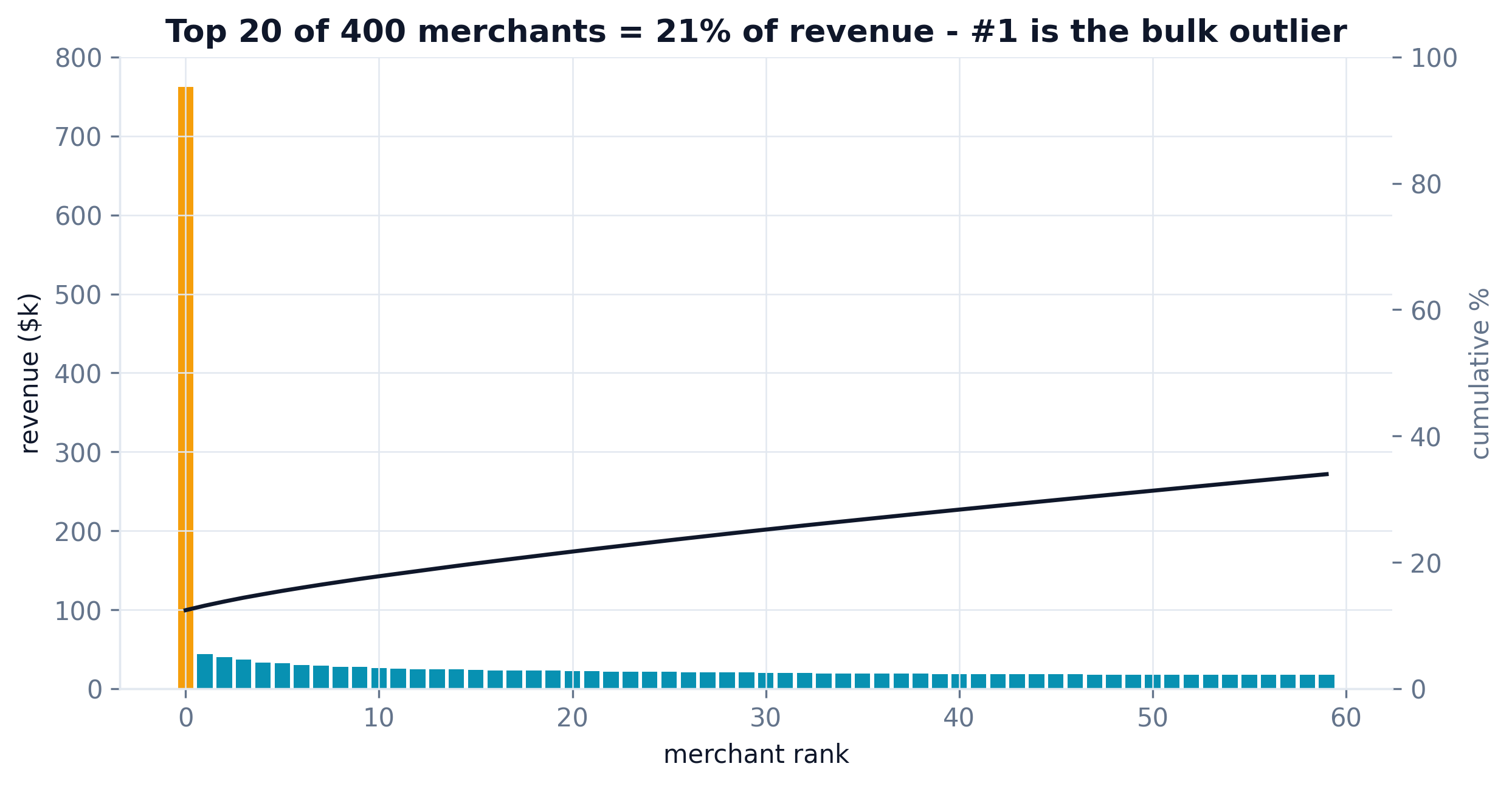
Concentration - after cleaning. Rank #1 is the M0007 bulk outlier, not a hero merchant. Read the platform only once it is excluded.
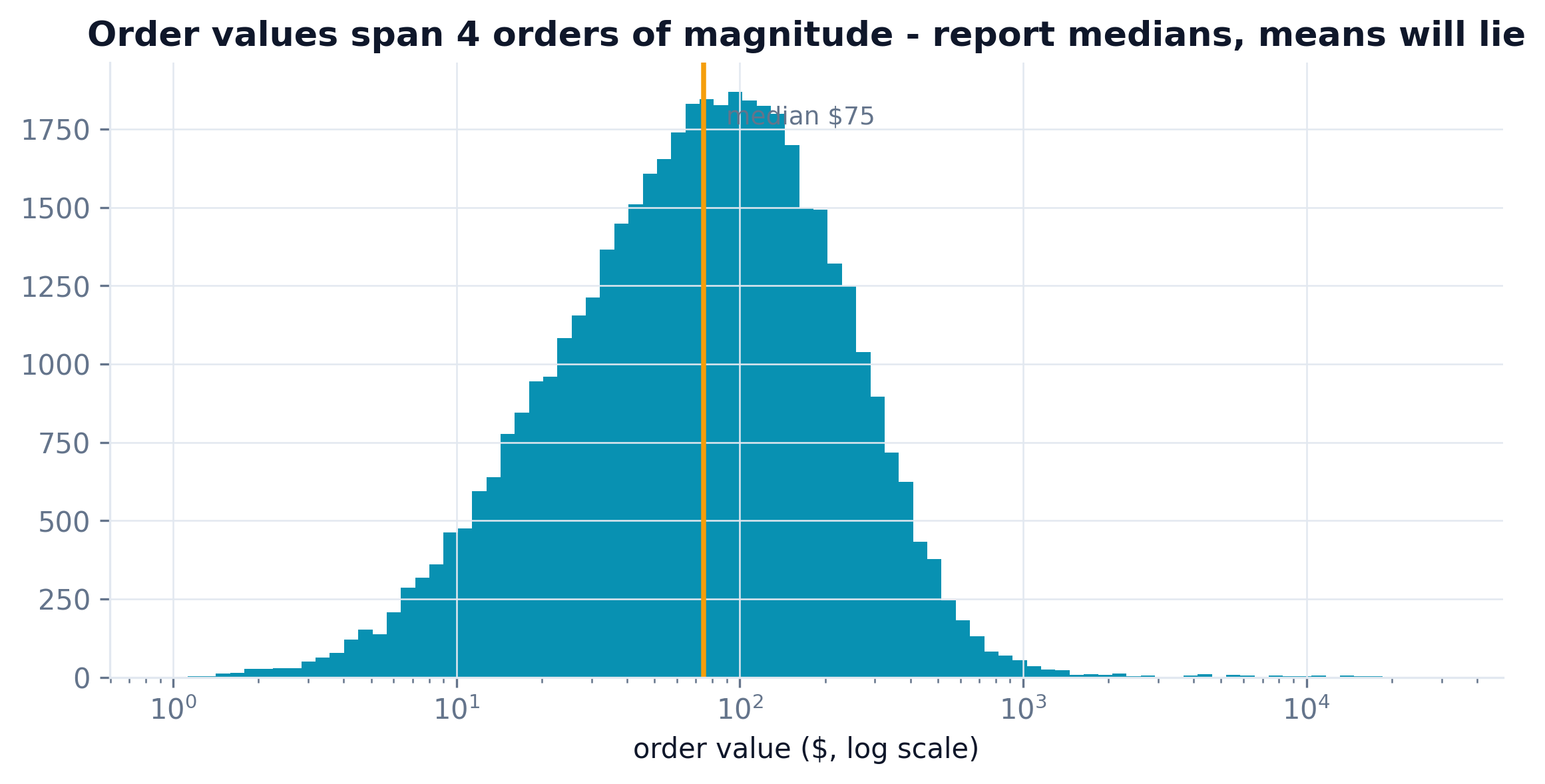
Skew. Order values span four orders of magnitude - report medians; the mean is dragged by the wholesaler.
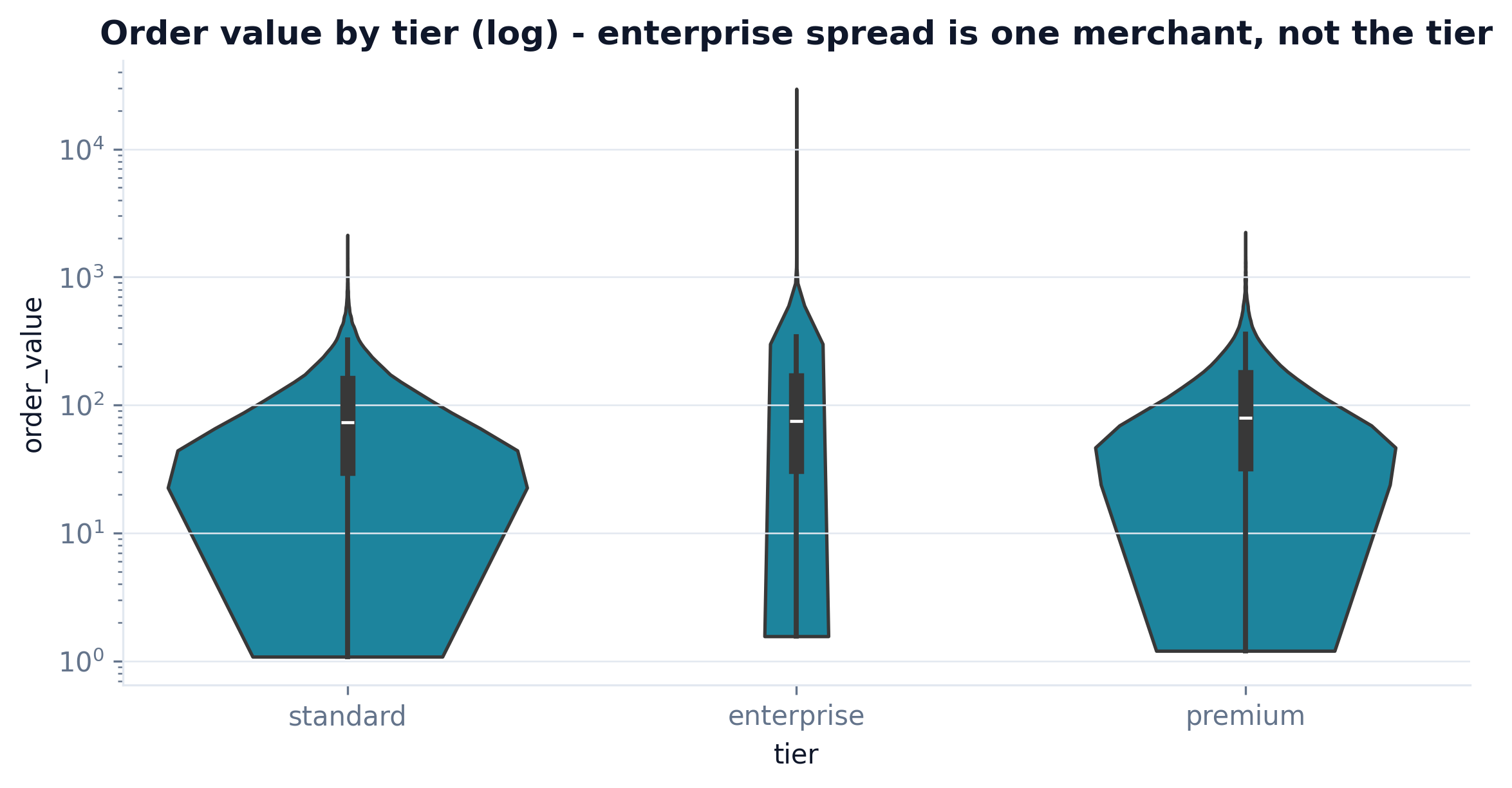
The tier that isn't. Enterprise's long upper tail is essentially one merchant (M0007), not a tier-wide behaviour.
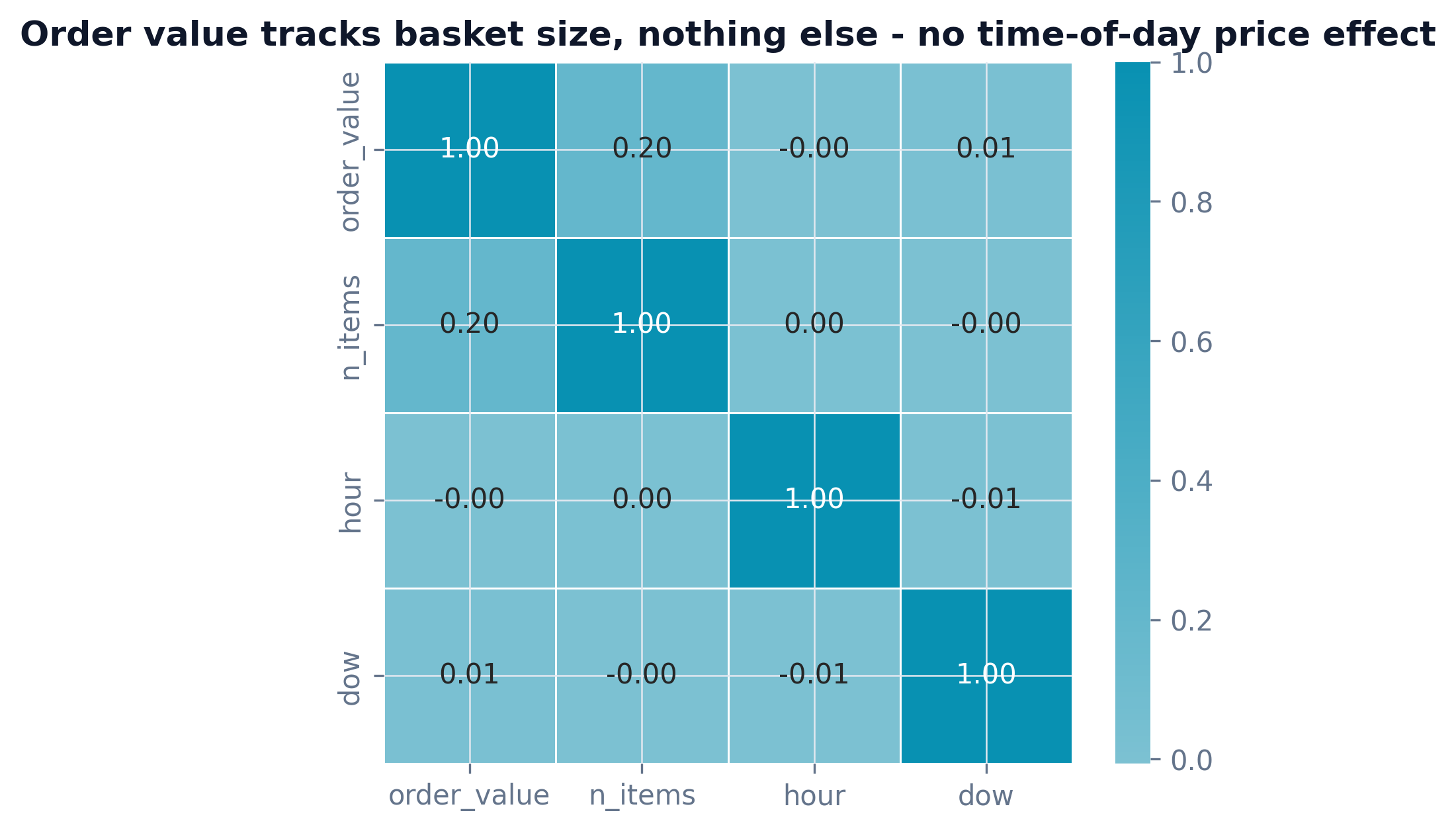
No hidden driver. Order value moves with basket size and nothing else - no time-of-day price effect to chase.
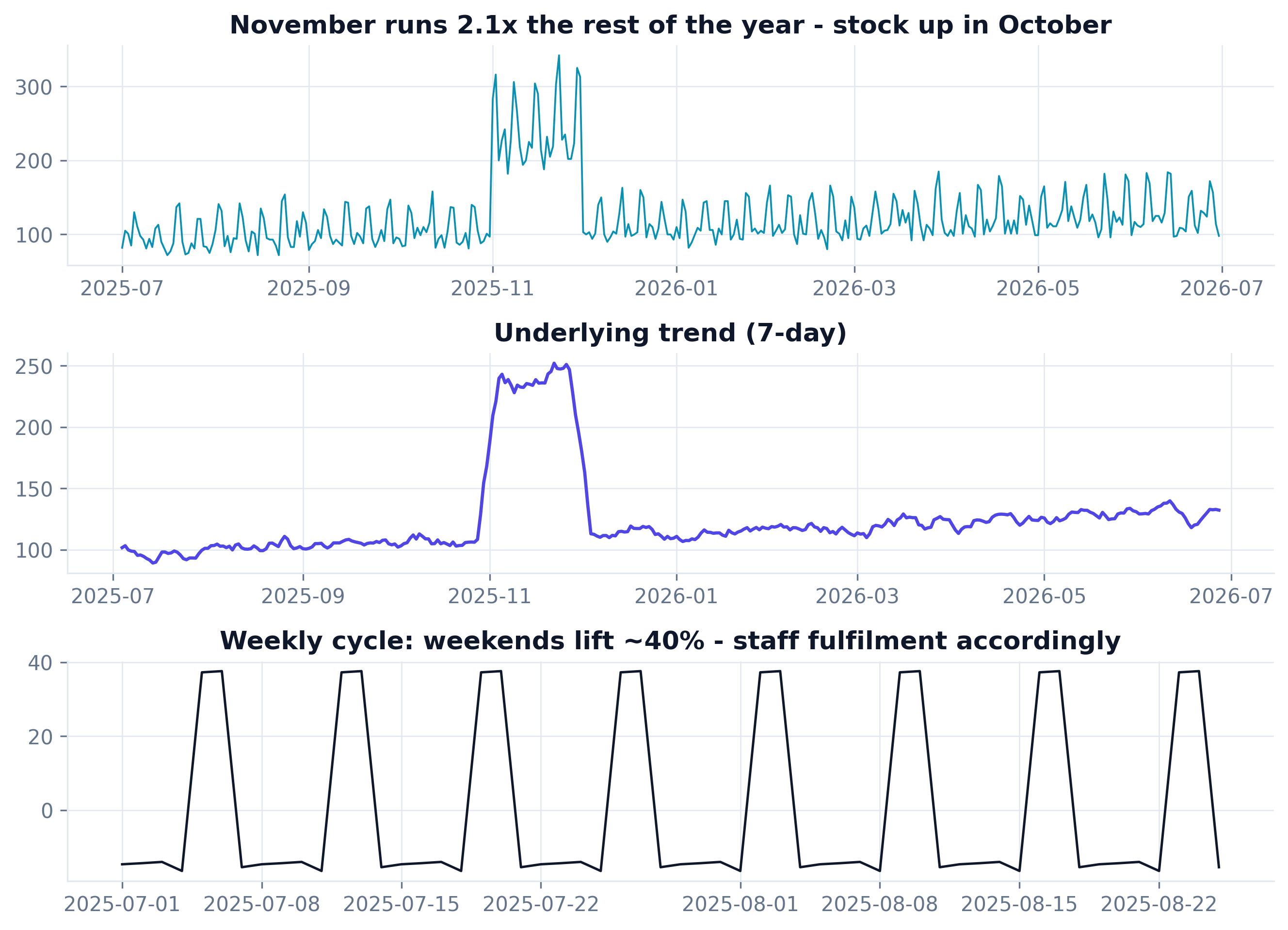
Rhythm (canon). November runs 2.1x baseline, weekends lift ~40%. Commit Q4 capacity by September.
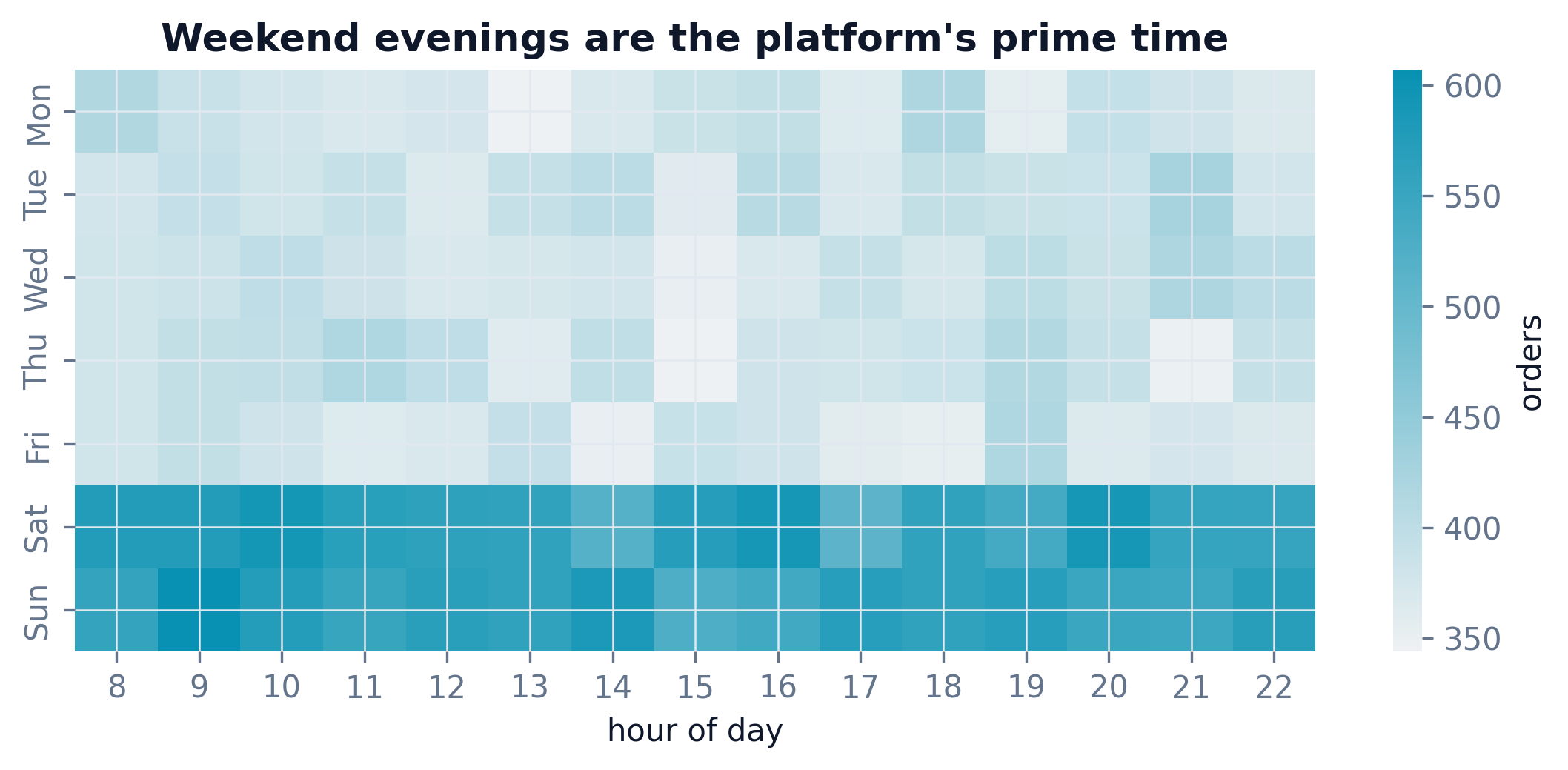
Prime time. Weekend evenings are the platform's busiest window - staff and promote into it.
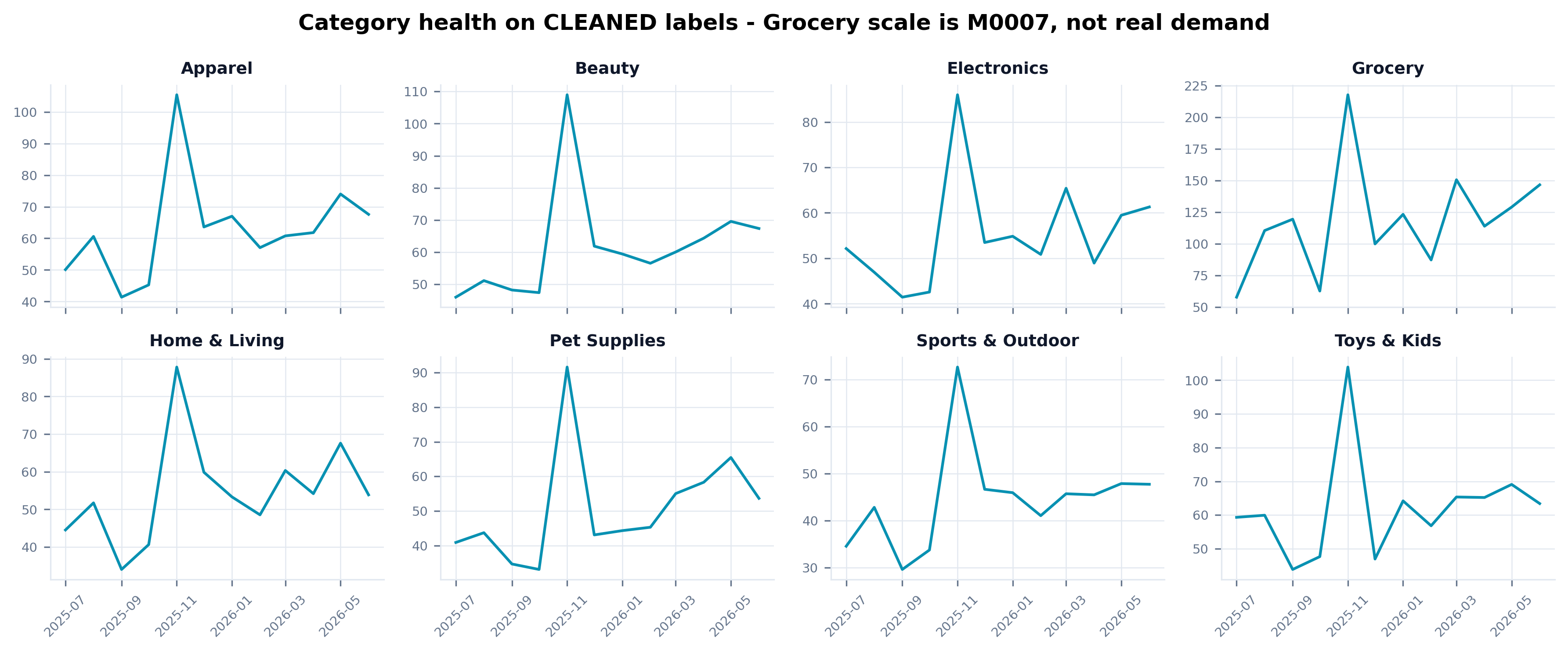
Category health - on clean labels. Read only after normalization; Grocery's scale is M0007, not organic demand.
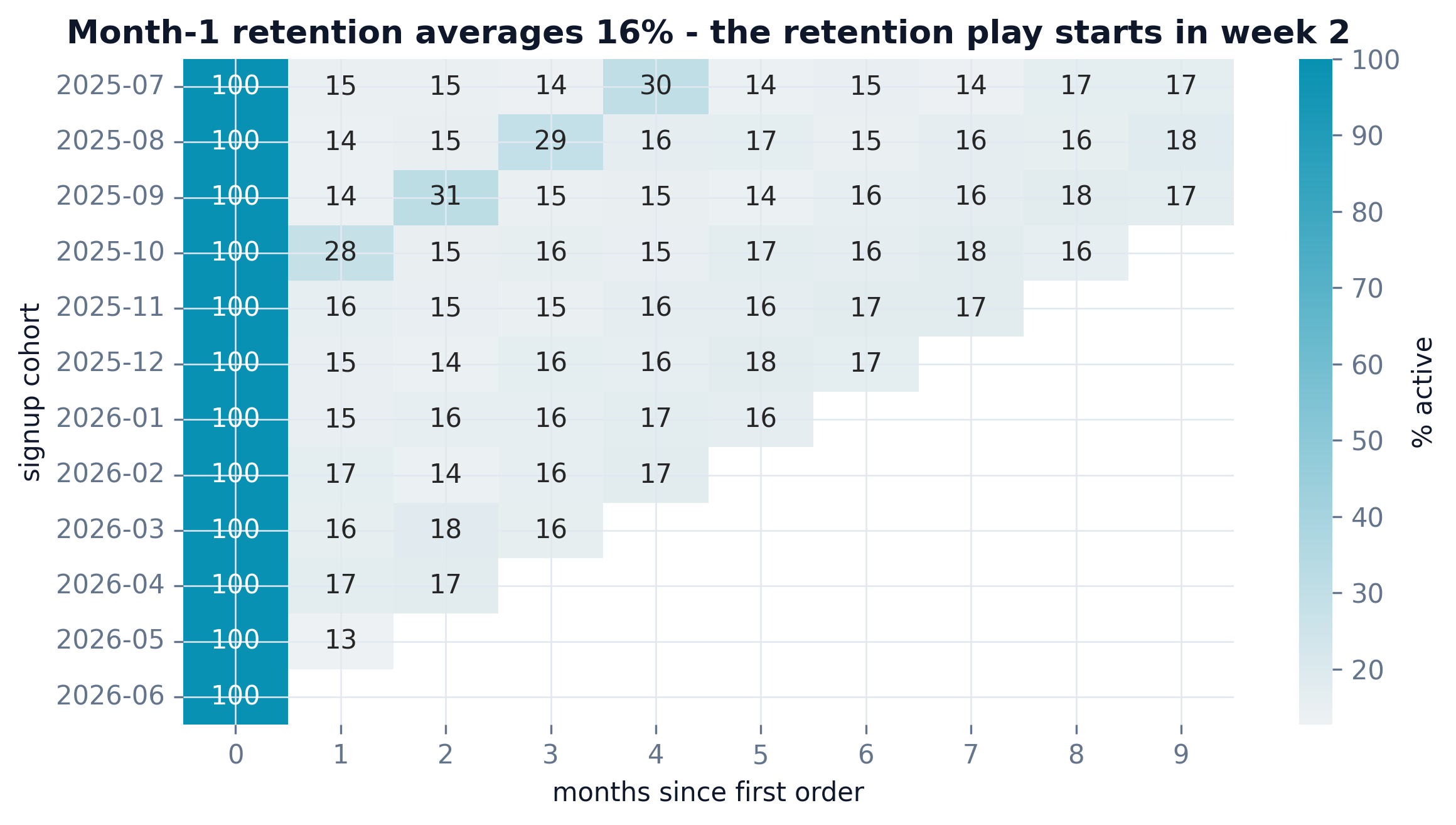
Retention. Month-1 is where customers are lost - the retention play starts in week 2, not month 3.
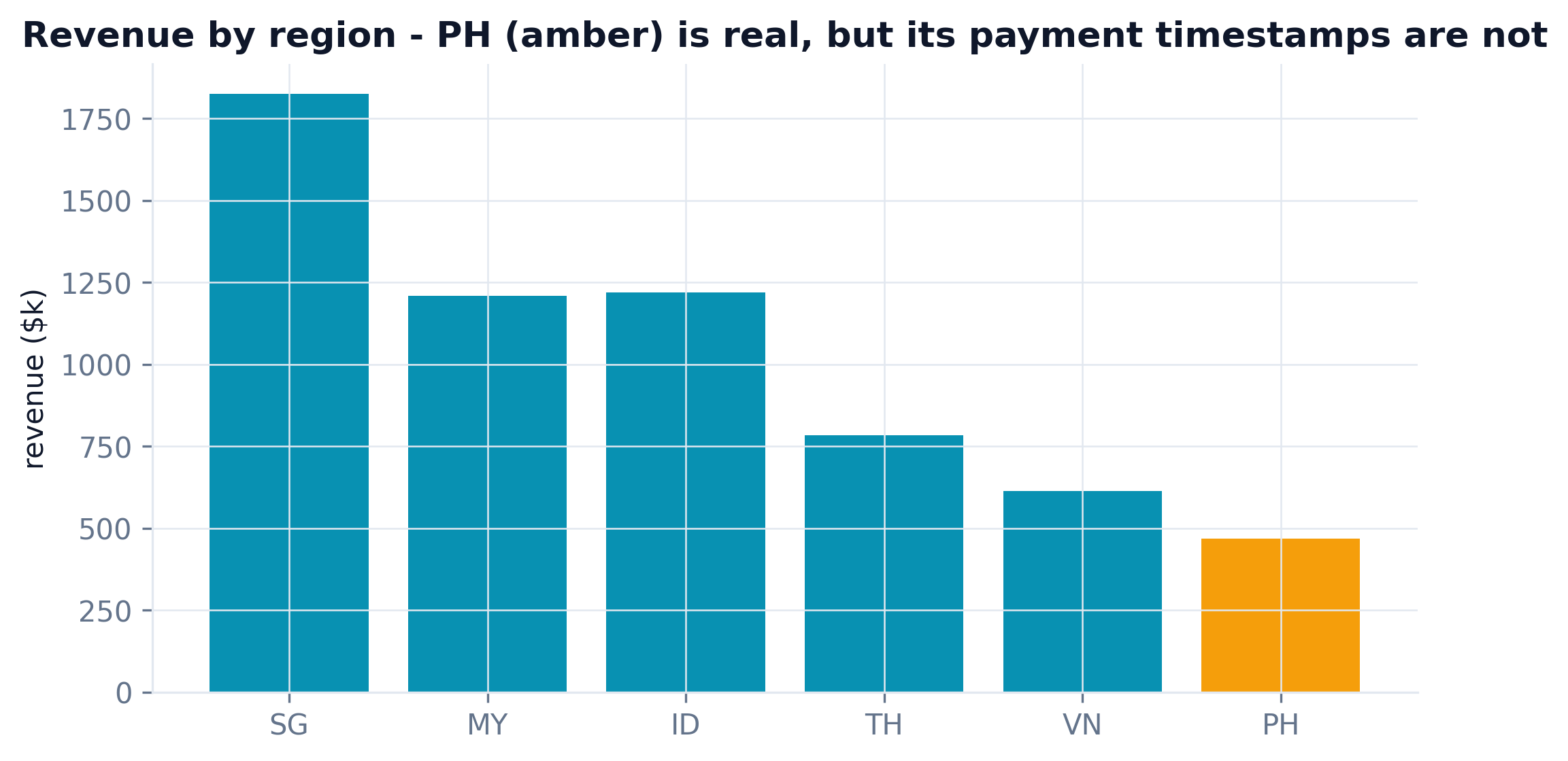
Geography. PH revenue is real and sizeable - but until its timestamps are fixed, no PH conversion-time metric can be trusted.
| Planted quirk | Caught by | Impact | Status |
|---|---|---|---|
| Orphan foreign keys (bad ETL join) | Profiling + RI check | $153,996 unattributable | ✓ caught |
| Stale price snapshot (Sep-Nov) | Price-drift scatter | $385,330 understated | ✓ caught |
| Timezone bug (PH paid before order) | Payment-latency histogram | $474,948 bad timestamps | ✓ caught |
| Dirty category labels (8→14) | Cardinality + rollup fix | $557,134 mis-bucketed | ✓ caught |
| Round-number fabrication (M0333) | Benford + round-share | $45,433 reconciliation gap | ✓ caught |
| Duplicate customer identities | Fingerprint dedup | 800 records (3.8%) | ✓ caught |
| Canon re-confirmed: M0007 outlier + seasonality | Pareto + decomposition | 2.1x Nov · 12% of revenue | ✓ confirmed |
The deliverable:
↗ findings.md - all 8 findings ranked